Doublé (2017) from Alex Yiu on Vimeo.
Doublé
for flute, clarinet in Bb, viola, violoncello, piano and video with stereo sound
8’
2017
Programme Note
In what situations that can an artist truly represent both history and politics? When our social media has become the clash of political messages and ideology, how are we able to speak about politics through arts again? Ranging from Francisco Goya’s depiction of Napoleon’s occupation of 1808 in Spain, to punk rock’s anti-establishment ideologies in the 70s, visual art and music are always served as a manifestation of the artist’s own personal belief.
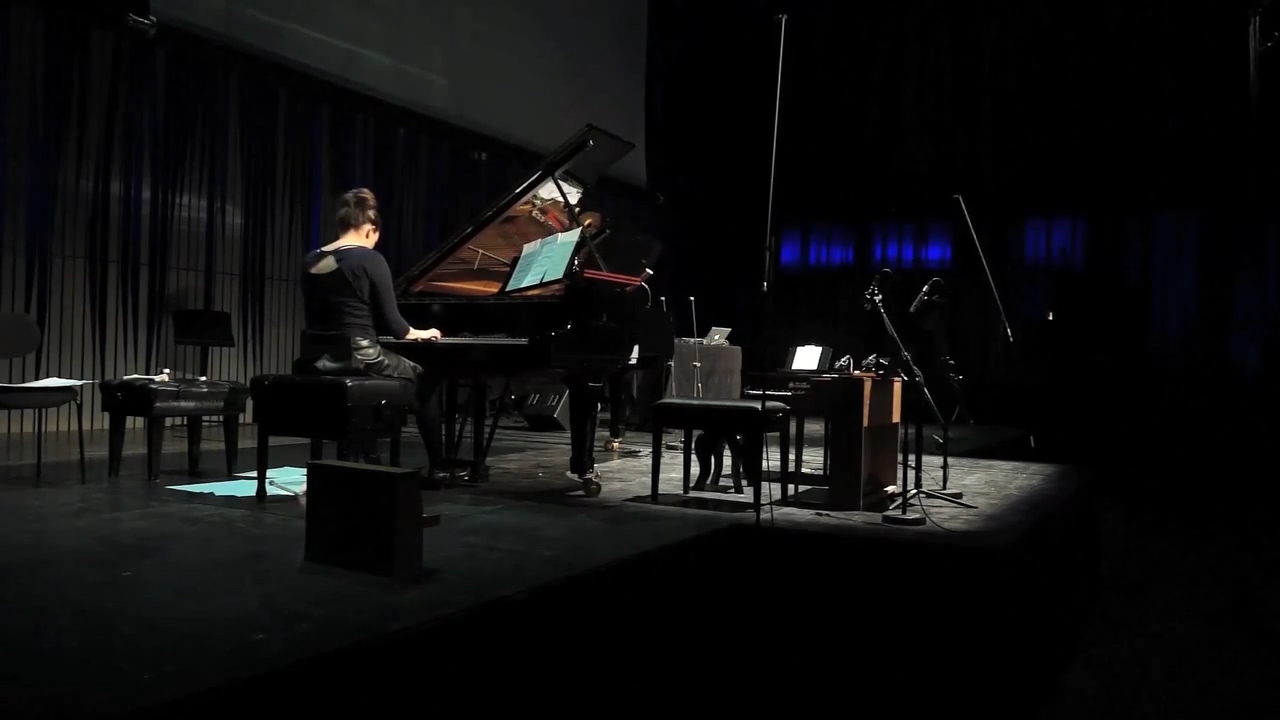
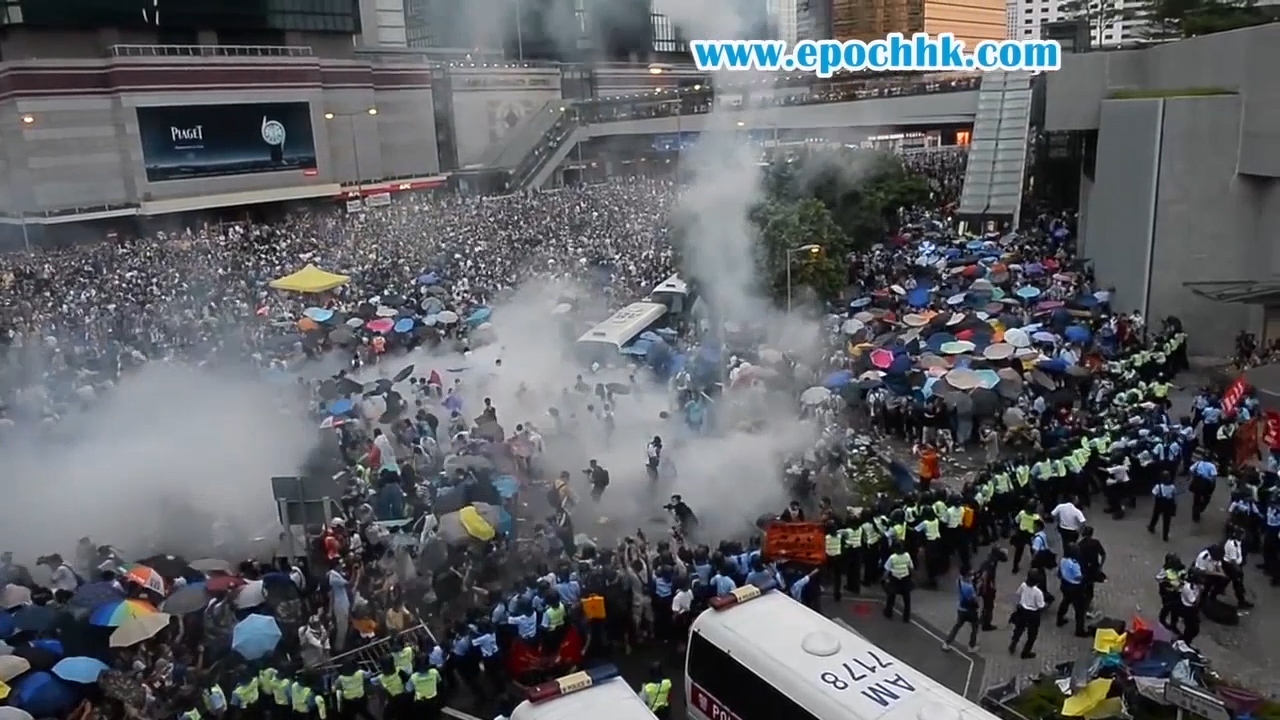
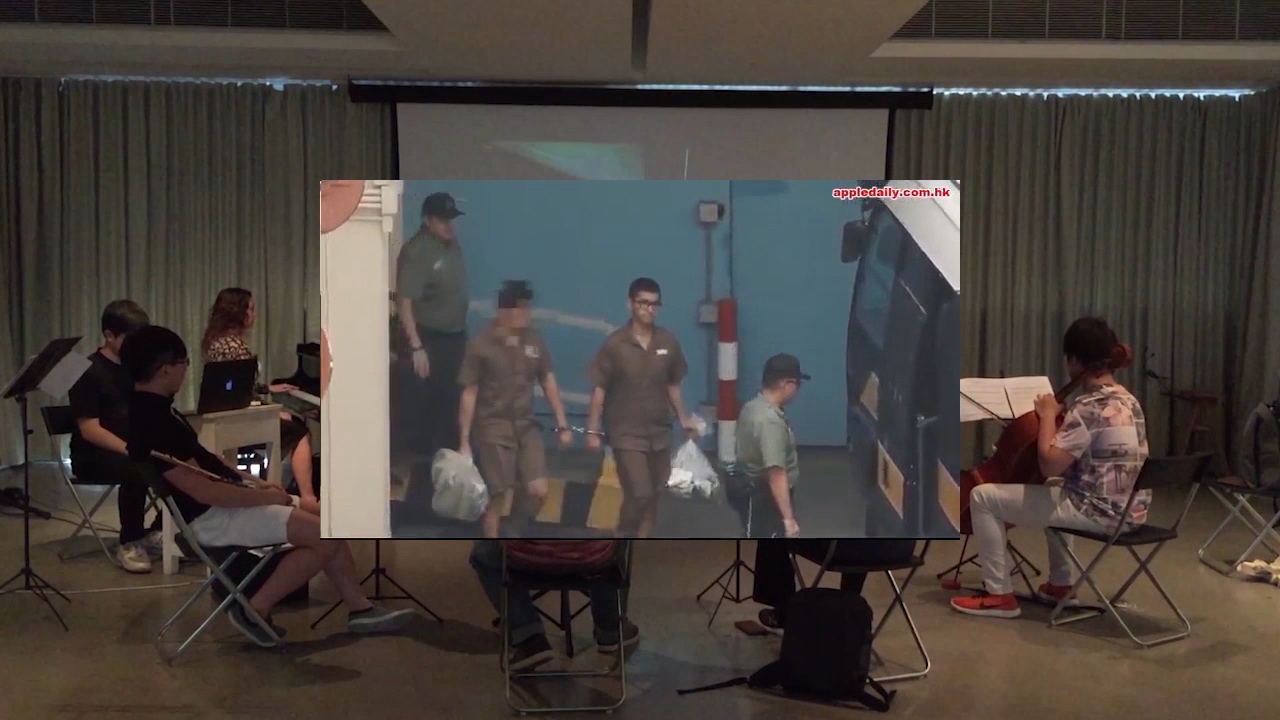
‘Doublé’ is a piece that comprises an ensemble and a video which based on a footage in relation to Icelandic pianist Tinna Thorsteinsdóttir and a rehearsal footage that was done in Hong Kong. While the video also depicts a series of political events happened in Hong Kong, this is an experiment to seek an unlikely connection from unrelatedness.
Doublé received its premiere at Cycle Music and Art Festival 2017, Kópavogur, Iceland.



HALLELUJAH (2017) from Alex Yiu on Vimeo.
Single channel video with stereo sound
9'05
2017
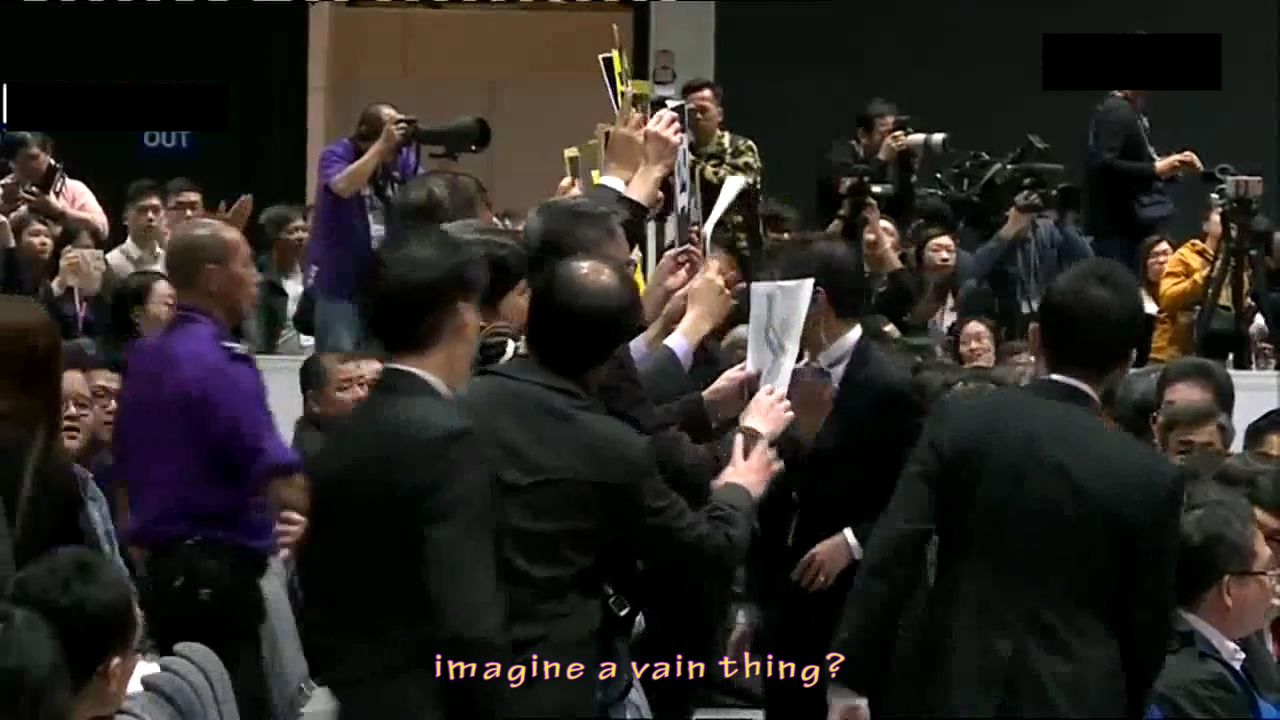
On 12 January 2017, Carrie Lam, the former Chief Secretary of HKSAR, submitted her resignation to run for chief executive. A local media cited a source that, during a closed-door lunch with the officials, Lam, a Catholic, said it was God who told her to resign and join the election. She was later elected as chief executive of Hong Kong with 777 votes. Coincidentally, 7 is considered as a holy number in Christianity, and 777 even represents the threefold perfection of the Trinity. Messiah, an oratorio composed by George Frideric Handel in 1741, is a masterpiece represents a commentary on Jesus as the Messiah called Christ, and his Nativity, Passion, Resurrection, and Ascension. There are no dramatic roles, no dominant voice, and even quoted speech, instead of dramatising the life and teachings of Jesus, the librettist, Charles Jennens’s intention was to acclaim the “Mystery of Godliness”.
In this video, I have selected the music of Messiah from its part II scene 6 to 7, which are the representation from “The world and its rulers reject the Gospel” to “God’s triumph”, ending with the famous chorus “Hallelujah”. The music is put together with the video of the announcement of 2017 Chief Executive Election of HKSAR. The ‘777’ votes reinforce the rumour and mystify Carrie Lam’s religious belief. At that moment, religion, politics, and sacred music merged into a perfect harmonisation with the sound of angry protesters and supporters in the venue, justifying the fact that God’s will has made Carrie Lam become the next chief executive of Hong Kong, no matters if she was selected by the Election Committee of 1,200 members, or disfavoured by the majority of Hong Kong people.


Remember That Lesson About Time (2015) from Alex Yiu on Vimeo.
Remember That Lesson About Time
6’40”
2015
Video with stereo sound
Subvocalisation. Wakey-wakey. A lesson about time.
Remember That Lesson About Time (2015) is a 6'40" video with stereo sound, made in a corner of my room in London. I placed two alarm clocks set to the same time, and occupied the gap created by the slight inaccuracy between their rings by quietly humming Tourbillon (陀飛輪), a Cantopop song with lyrics written by Wyman Wong for Eason Chan. In the video, the lyrics are replaced with homophones—Chinese characters sharing the same pronunciation but carrying entirely different meanings—presented as subtitles against the ticking of the clocks. The substitution invites the viewer to recite the text aloud, gradually recognising something already lodged in their own memory. In the gallery, the video is presented on a CRT television placed directly in a corner of the room, overlaying the filmed corner with a physical one. Working through the unique one-pronunciation, multiple-characters quality of Chinese, the piece treats language not as a fixed record of time, but as a site where memory slips, defers, reconstitutes itself, and then forgets it ever did so.
有聲的。夠鐘。關於時間。
《記住那關於光陰的教訓》(2015) 是一件時長 6'40" 的立體聲錄像作品,攝於我在倫敦宿舍房間的一個角落。我在那裡放下兩個鬧鐘,將兩者調到同一時間。鬧鐘的機械走時本就不夠精準,於是我在兩次鈴聲之間的空隙,回到座位,輕輕哼著黃偉文為陳奕迅填詞的廣東流行曲《陀飛輪》。在錄像裡,歌詞以同音異字的方式呈現為字幕,配合鬧鐘的節拍聲。這種替換邀請觀眾嘗試唸出字幕,在不知不覺間,從記憶深處辨認出那首早已熟悉的歌。展出時,錄像以一部陰極射線管電視機播放,置於展場的角落,將錄像裡的角落與現實空間的角落疊合為一。借助漢字一音多字的特性,作品將語言視為一個不固定的時間記錄,而是一個讓記憶不斷滑移、延宕、重新拼湊,然後忘記這一切曾經發生過的場所。


Das Unaussprechliche (2017) from Alex Yiu on Vimeo.
Das Unaussprechliche
11’30”
2017
Video with stereo sound
Above, it isn't bright.
Below, it isn't dark.
Seamless, unnamable,
it returns to the realm of nothing.
Form that includes all forms,
image without an image,
subtle, beyond all conception.
Tao Te Ching, 14
To what level that things are related to us personally? From a cup which you have used, to the moment after you finished showering, we skip our feeling toward all these things by default, and look for ourselves through social media and the phone that you use. While we seldom examine the objects around us, and all the fleeting moment happened during our life, we treat most of these things as a process or a journey to things that we concern, yet we forget how all these small things and moments really conceive what we really are. In this video, numerous objects and moments are captured and accompanied with an voiceless commentary which investigates the relationship in between these things and the fictional protagonist of the video. Through all these tiny little fragments in our life, I try to make the unspeakable private matter speakable.
The video was made during the Munich Biennial - International Biennial Platform Hong Kong at Connecting Space Hong Kong in March 2017.


midday, Quarry Bay (2013) from Alex Yiu on Vimeo.
Yasi * We Friend – a cross-media response exhibition to Leung Ping Kwan
“Poet” should be the profession that Yasi stated on his resume. Yet Yasi, as we all know, was fond of bypassing boundaries; he was never such a poet to be confined to his position. Engaged with different art forms, he enjoyed interacting with artists and photographers on the construction of imagery, with dancers exploring the possible fusion of text and the human body, with musicians achieving a dialogic collision within the abstract space of musical notes — not to mention those local and overseas literati who translated or interpreted his works. One can imagine the resonance produced when these verses, regardless of nationality and language, are recited altogether must be as magnificent as a symphony!
Never has the passing away of any poet in Hong Kong aroused such a huge response in the cultural circle. It is because Yasi has taken off his hat of a poet, transcended the boundary of literature and affected friends in different disciplines and of various nationalities.
This cross-border poet had a great passion for life. He was indeed such a vivacious “Hong Kong guy” beneath the label of a “poet”. Although the words “I lived a very happy life ‘as a Hong Kong guy’” may seem somehow exaggerated, its veracity is revealed in Yasi’s works about this city.
He continuously adjusted his perspectives in reading and writing this city, and his explorations gathered more and newer observations. In Ducky Tse’s photographic-journey across the territory, Alex Yiu’s award-winning percussion music piece, Carman Fung’s self-sung poem as well as the response-verses of Chung Kwok Keung and Sandrine Marchand, we can find new portrayals of people and things somewhere on this island.
At the exhibition, a good number of works come from friends who have interacted with the poet, or who were inspired by either the works or personality of Yasi. Chow Chun Fai transforms imageries in Yasi’s works to a “city of films”, invoking continuous clips of memories somehow bizarre yet intimate at the same time. Esther Cheung reminisces about Yasi’s flame tree whose daring redness is then brushed by Thomas Au with his lens.
Li Kam Fai narrates his tribute by recording the reading of Yasi’s poem. Some young text-lovers also interpret their immaterial yet substantial encounters with Yasi in their works: Siufung composes his work of homage with original verses of Yasi, Wing Chan responds with photography and text; while others like Frederik H. Green, Jessie Ng and Madeleine Slavick use their familiar media to remember the late poet.
Yasi’s blossoming laughter and spirited face remain unforgettable. That smile, so vividly depicted by Candaces Leung, a close friend of The Thumb magazine days, is also found in Lee Ka Sing’s photo. How do artists of the younger generation portray Yasi? Chrysanthus Chan records the laughter with acrylics, whilst Chihoi and Lam Tung Pang sketch the visage with charcoal and ink. All arouse deep thoughts amongst Yasi’s friends.
Speaking of good friends, Yasi and the photographer-couple Lee Ka Sing and Holly Lee witnessed the upbringing of each other’s children. Ka Sing uses 27 small cubes and Holly a photographic-image to synthesize their many shared moments and memories. Friends like Liu Wai Tong, Esther Cheung and Agnes Lam respond with poems. Meanwhile, Jam Wu adopts paper-cutting to commemorate his friend while Lee How Chung chooses to work on a hand-made book.
None of his friends would deny Yasi was so addicted to eating, and indeed Yasi has written many poems on food. When praising the bittermelon in poetry, he is savouring different sceneries, both flat and pleated, of the human world. We understand why Andy Yung displays Yasi’s verses inside a vegetable stall, he has to tell farmer Yasi’s story. When farmer tells the story to everyone, poetry then starts linking up with everyone, everywhere. Yasi’s poetry and smiling face are still with us, he has never left this colourful, tasty world.
———Anne Leung Co-curator
Yasi * We Friend -
A Cross-Media Response Exhibition to Leung Ping Kwan
Date: 10 – 28 January 2014
Time: Monday to Saturday,
noon – 10pm
Venue: Hong Kong Fringe Club
2 Lower Albert Road, Central, Hong Kong
也斯*吾友 —
跨媒介回應展
在簡歷表職業一欄上,也斯填寫的應是詩人。但這位詩人好不安份,總是游離在框與框的邊緣 : 與藝術家、攝影家在意象的構想上作出交流,與舞蹈家探索形體和文字的可能性,與音樂家在音符的抽象空間中互相碰擊……還未曾計算那些將他的作品翻譯、詮釋成不同語言的本地和外地的文化人,可以想像,這些超越國籍、文字的詩句一起同時朗讀,那共鳴的聲音定可媲美一首壯觀的交響樂!
在香港,從沒有一位詩人的離去在文化界會引起這麽大的迴響,因為他早已脫下詩人這件外衣,跨越文學的界線,他的「吾友」來自不同界別、不同國籍。
這位游離自在的詩人總是那麽熱愛生活,在詩人本位之前,他就是這樣一位活脫脫的地道「香港人」。「『作為香港人』我一生過得很快樂」似乎有點兒誇張,但卻真實從也斯的作品中透出。他不斷調整閱讀和書寫這城市的角度,他的摸索帶來更多更新的觀看。在謝至德的影像旅程、姚少龍的原創打擊音樂、馮嘉汶的自彈自唱詩作,還有鍾國強和桑德琳的回應詩句,都重新記下了這小島某處的一些人、一些事。
在展覽中,不少作品是受着也斯詩作或個人所感悟,或與也斯互動而成的。周俊輝將一段段的意象轉化為一幕幕連續的電影城市記憶,既奇異亦熟悉;張美君則記下鳳凰木的點滴,區國強再將火浴豔紅在鏡頭下傳遞;李錦煇的閱讀過程再造錄像……還有,新一代文字愛好者在作品中演繹自己與也斯一份既飄渺又實在的神交;小風將也斯的詩句解構重現,陳穎華用攝影和文字回應,其他還有葛浩德、吳芷欣和思樂維都以各自熟悉的媒介回應。
也斯爽朗開懷的笑聲、積極的面容總是令人難以忘懷;「大姆指」時期好友肯肯仔細描繪、李家昇以照片佐證。後輩又如何勾畫也斯呢?陳蕙瑜用油彩畫下笑聲,智海和林東鵬輕輕勾勒,着着牽動多少好友的追憶。
說到好友,互相看着對方子女成長的李家昇和黄楚喬夫婦,分別以立體小方塊及攝影概括某部份不能忘懷的場景。還有,好友廖偉棠、張美君和林舜玲等的詩作,像讓大家記着也斯其實是一位詩人;而吳耿禎選擇剪紙,李孝聰選擇用雙手造出一本書去表示懷念。
也斯嗜吃,眾友皆知。也斯寫食物的詩也不少。在頌苦瓜的時候,他咀嚼的是人世間各種平坦摺疊的風景。所以翁志羽將也斯苦瓜的詩句掛在瓜棚,他將也斯的故事告訴農夫,然後農夫把故事告知大家,詩詞就與大家開始連結起來。這樣,他的詩句、他的笑臉在半空中繼續飛揚,觀看大地上各式的風景,從沒離開過這紛陳多姿的滋味人間。
— 梁麗碧 聯合策展人
也斯*吾友 — 跨媒介回應展
日期:2014年1月10日至28日
時間:星期一至六
上午12時至晚上10時
地點:香港藝穗會
香港中環下亞厘畢道二號